
Photo Ben Barry
Ben Barry journeys from relaxing Playa de Mogán to the spectacular Mirador del Balcón in Gran Canaria – retracing a World Rally Championship route along the way.
When the World Rally Championship made its first ever visit to Gran Canaria in 2025, it showed car fans that the Canary Islands didn’t just boast spectacular volcanoes and golden beaches – they also offer some truly exceptional driving roads.
Ahead of the WRC’s return from 23–26 April 2026, Detour set out to explore the GC-200 route used on the opening day of the rally, only in something a little less spicy and a lot more practical than a full-bore rally car – a VW T-Cross rental.
Located off the Atlantic coast of Northwest Africa, Gran Canaria is the third-largest of the Canary Islands and – with around 900,000 inhabitants – the second most populous island in the Spanish archipelago.
I land at Aeropuerto de Gran Canaria on the eastern coast and set out south along the GC-1 – a smoothly surfaced stretch of three-lane autoroute that loosely traces the shoreline. It leads first past industrial and commercial zones, then into more desolate expanses further south. It is not particularly appealing, but beyond the southern tip at Maspalomas, the landscape begins to close in around the GC-1. Soon I’m running through long tunnels that cut into the mountainsides, periodically re-emerging into piercing sunlight, before I drop down to the welcome sight of my accommodation at La Playa de Mogán. A fishing village with a crescent-shaped white sand beach, small harbour and calm water, it’s an easy place to switch off and recharge.
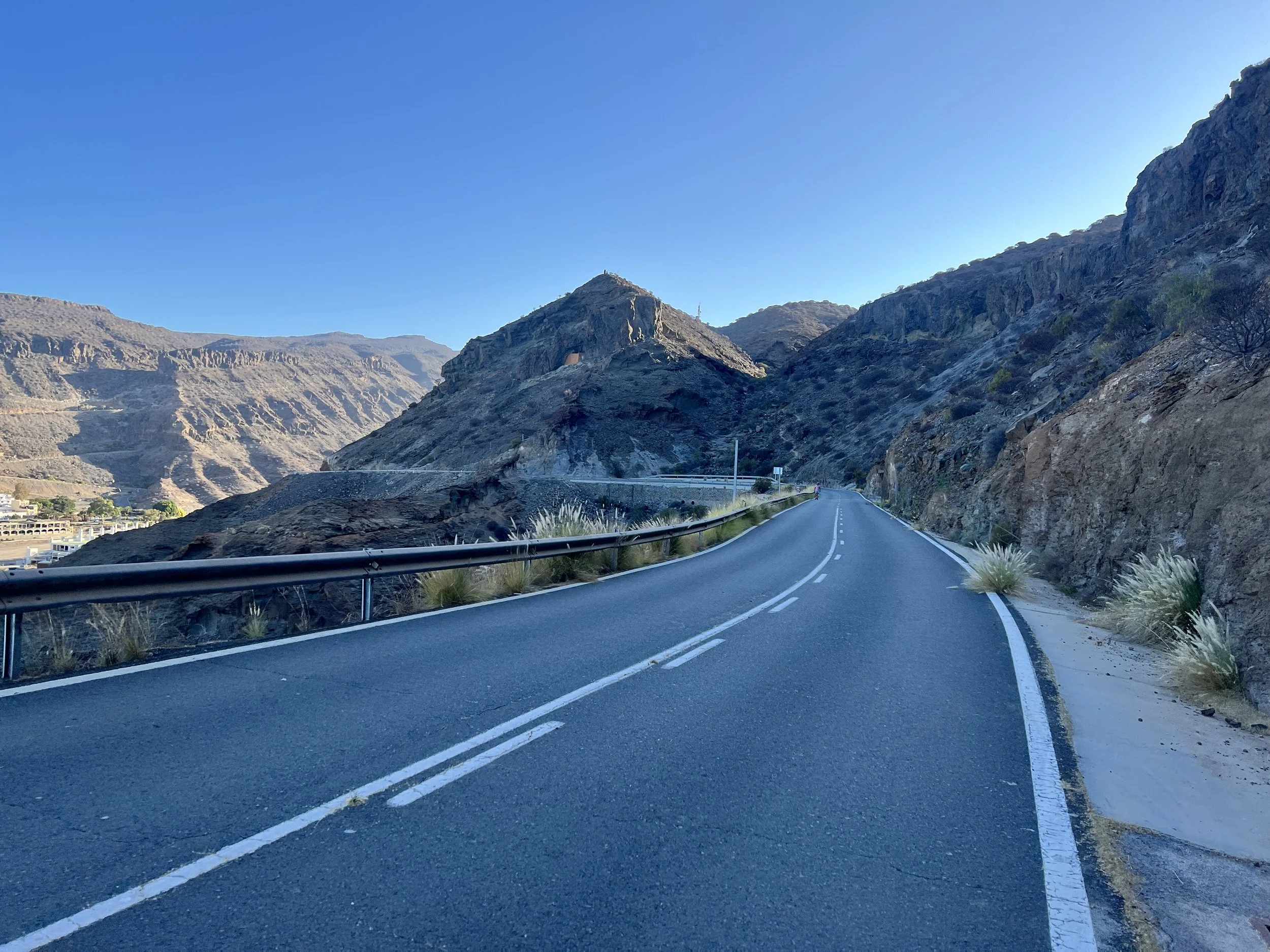
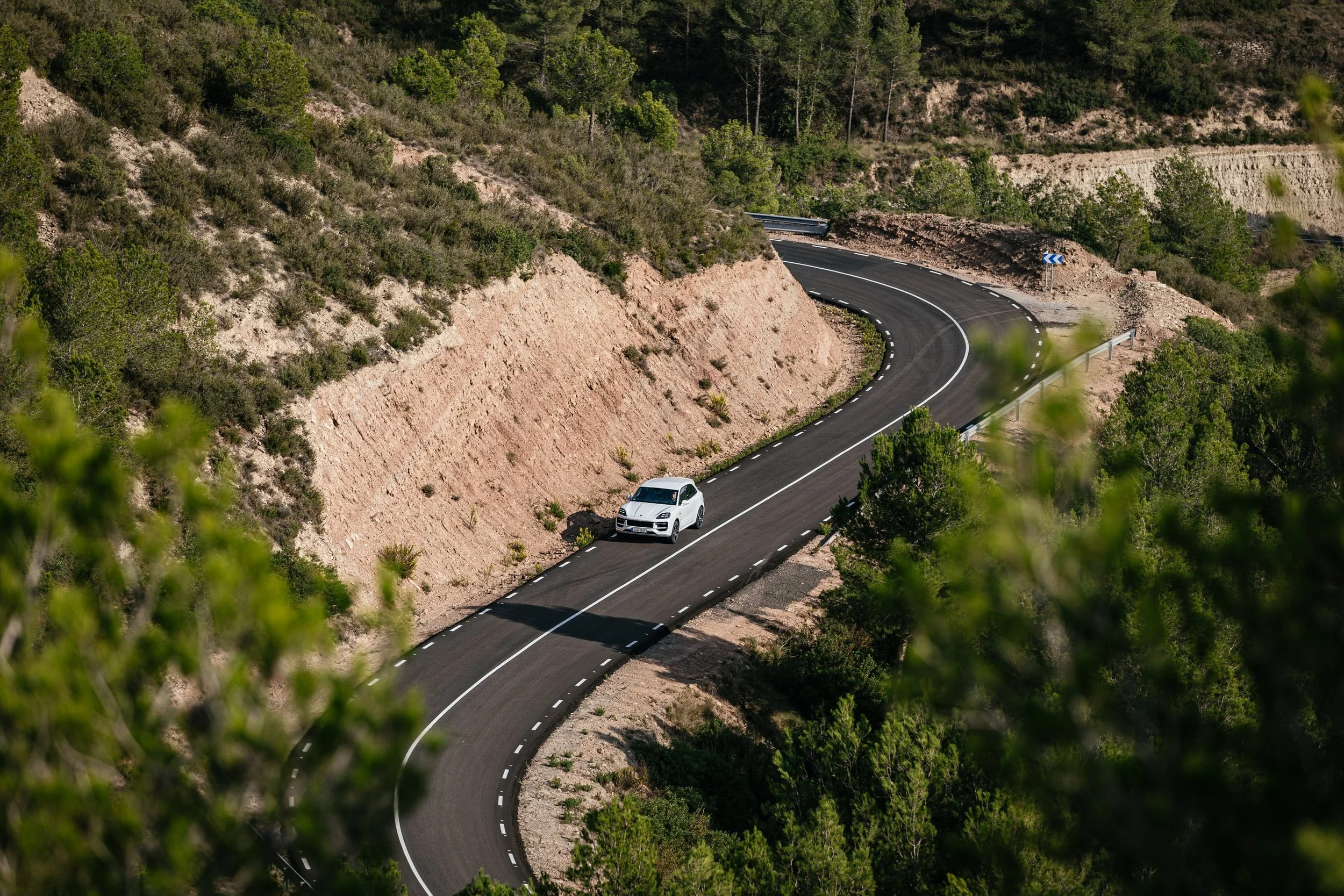
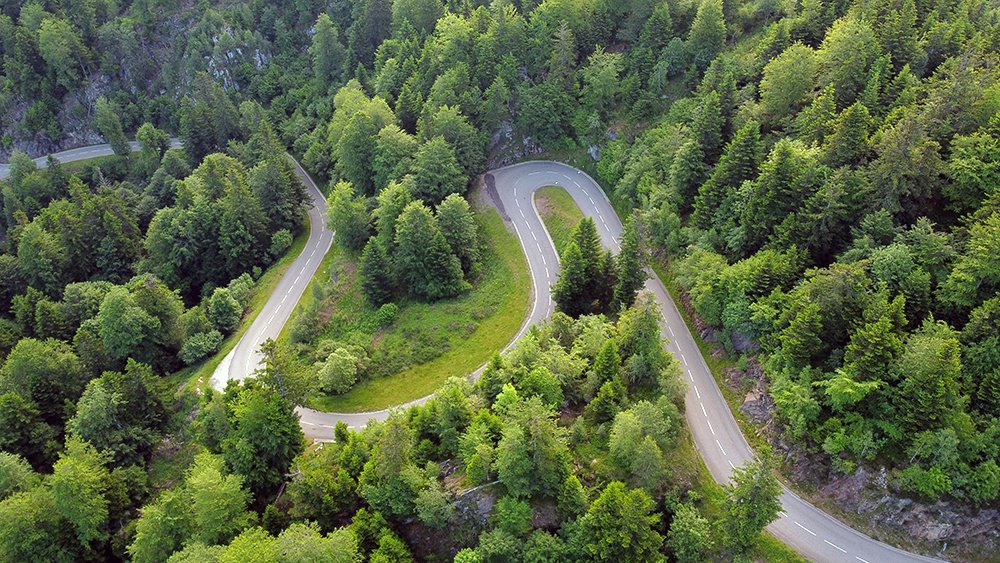
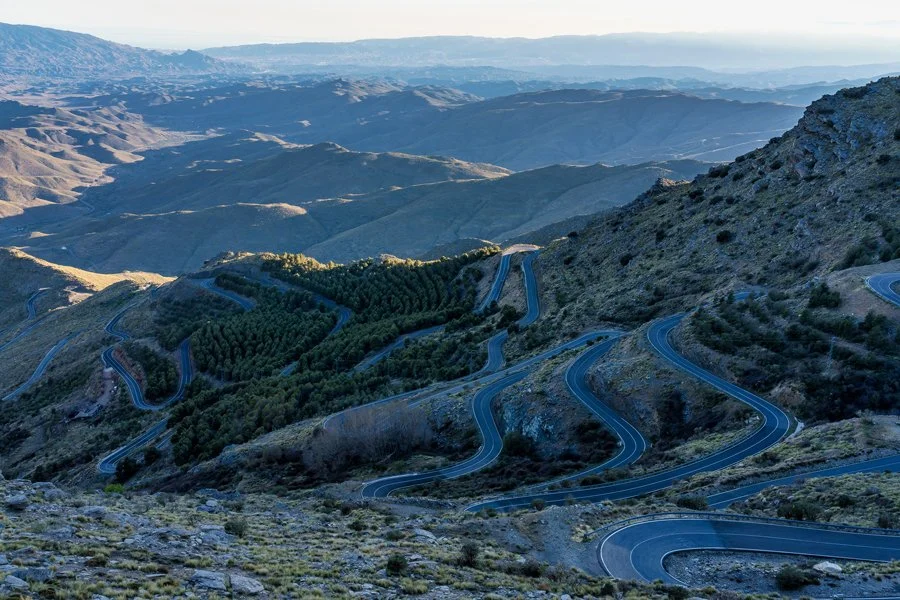
I do just that for a few days, before the pull of those rally roads takes over. I point the VW north, first inland towards the delicious-sounding Pie de la Cuesta, then onto the GC-200, which sweeps up into the mountains like a ribbon in the wind – the very road that, once closed to public traffic, rounded out day one of Rally Islas Canarias last year as drivers raced from La Aldea to Mogán.
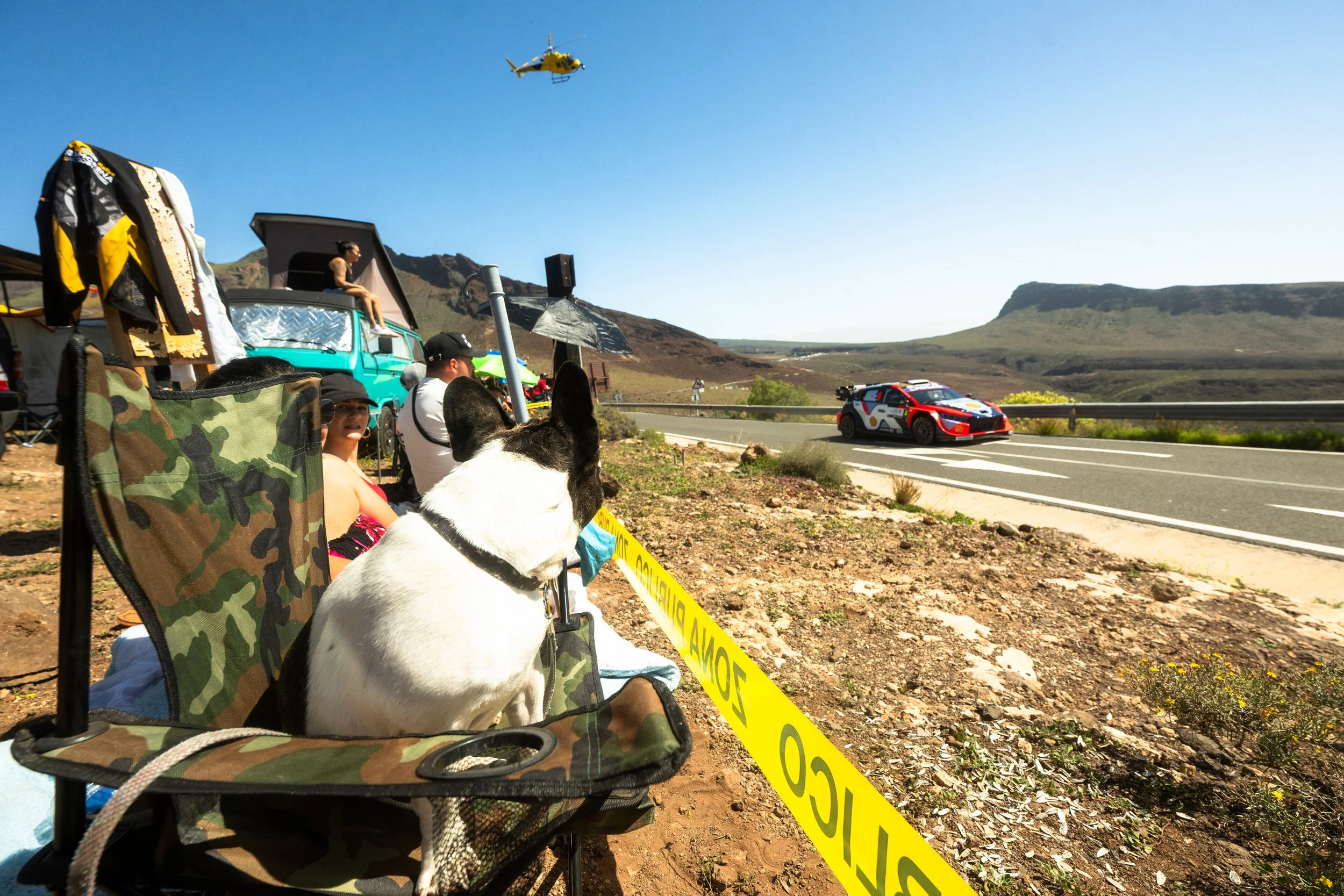
Rally action on the road in Gran Canaria Photo Red Bull
My pace today is rather more measured, but that’s no bad thing given the stunning scenery. I climb into the craggy interior, the white walls and terracotta roofs of Veneguera dropping away below, while the jagged peaks of the Inagua massif rise above, their layered rock strata giving the entire vista the feel of a digital image that hasn’t quite downloaded.
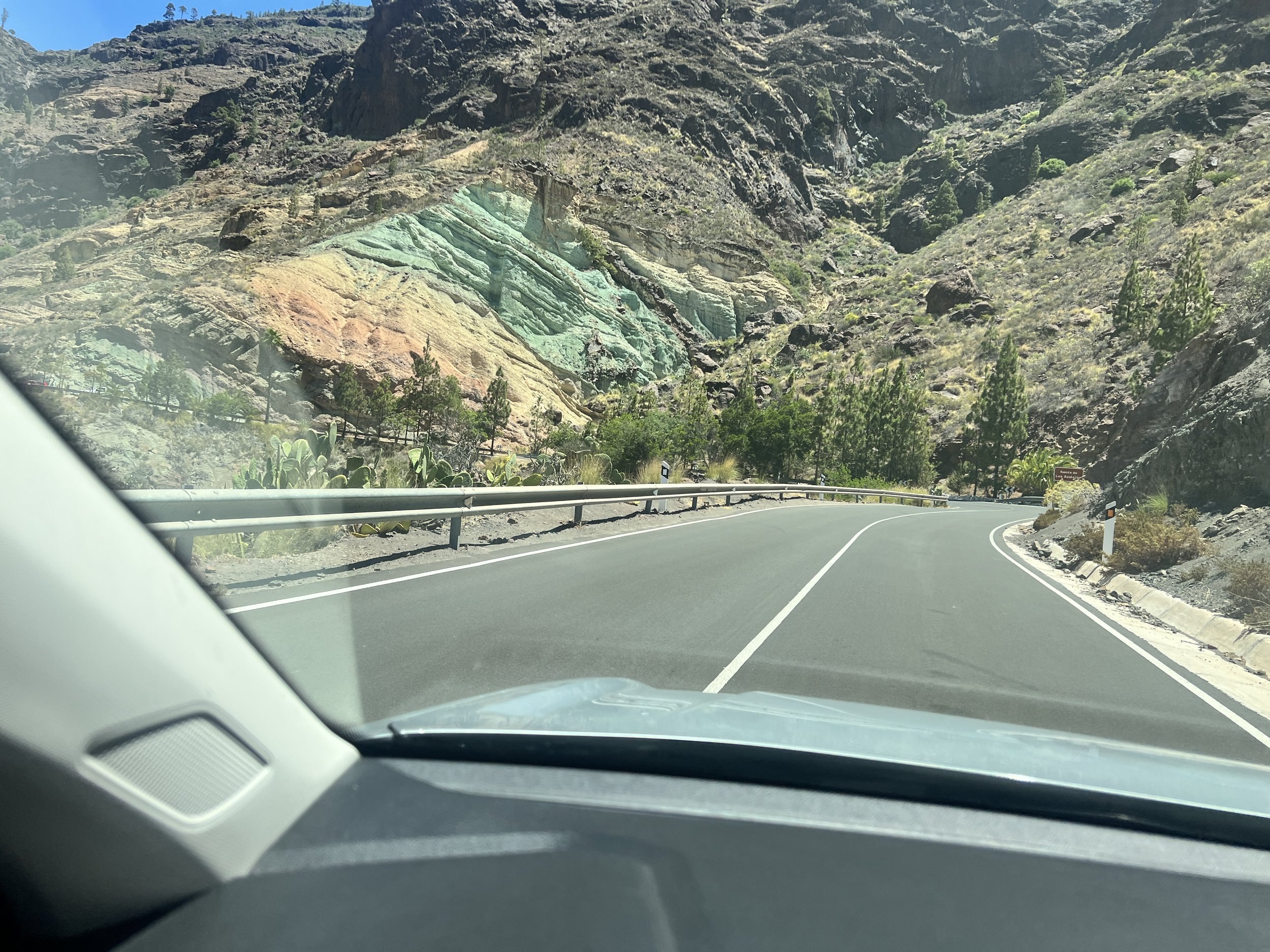
Soon the iconic coloured cliffs of Los Azulejos fill my windscreen, where the western face of the massif is streaked with vivid turquoise – the result of a dramatic chemical reaction between lava and water.
The terrain becomes more varied now, richer green vegetation scattered across the otherwise monochromatic palette of ochres and greys. It’s cooler at this altitude too, with clouds periodically rolling through to knock the edge of the heat.
The road is sublime with its smooth surface, good sight lines and curves that wrap invitingly around the mountainside. Tempting as it is to channel a little WRC spirit, the T-Cross’s modest 1.0-litre turbo quickly curbs my enthusiasm, as do the bright warning signs suggesting helicopters – and perhaps even drones – may be monitoring speed.
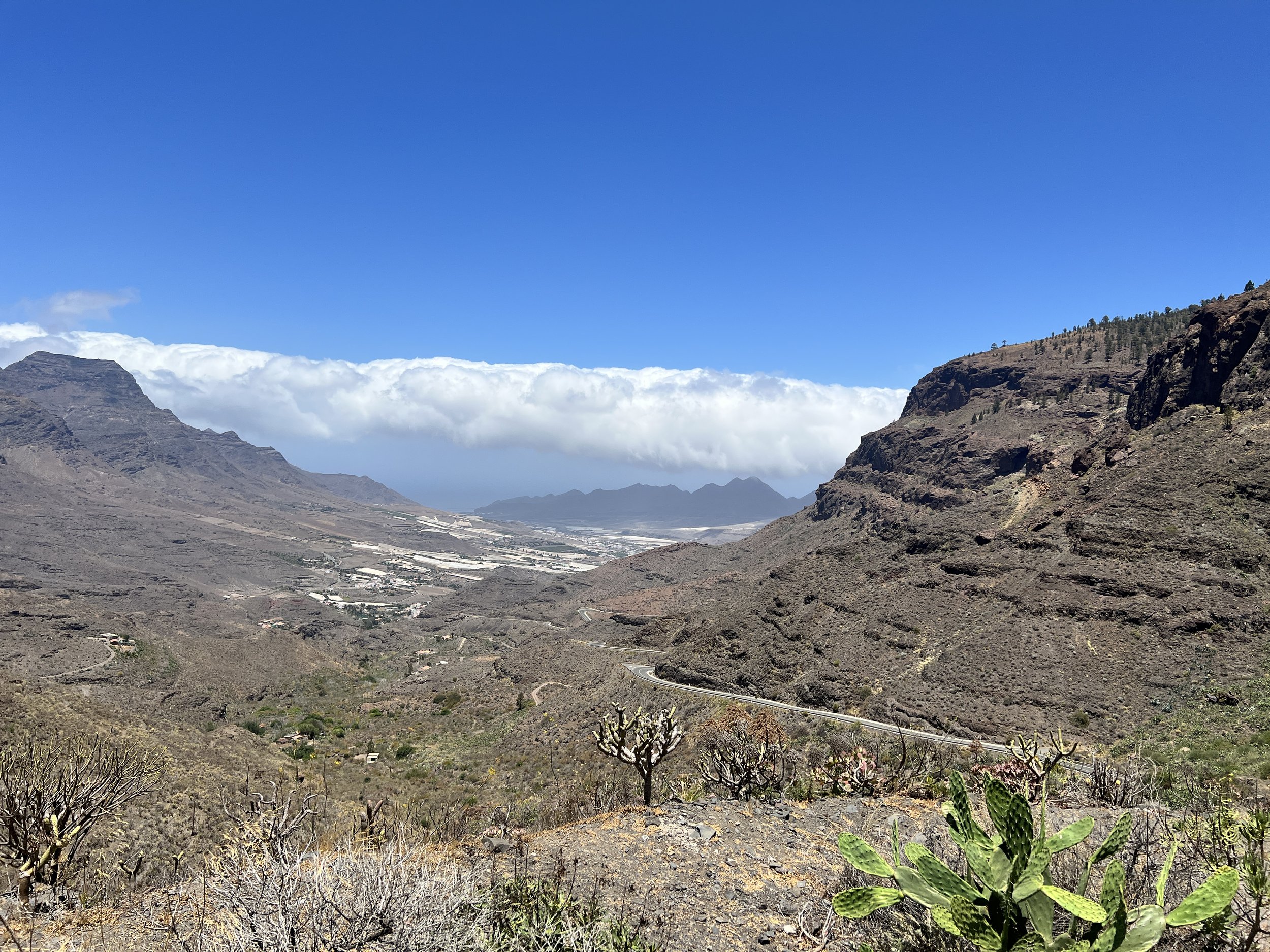
After a long climb that takes me beyond the rally stage, I descend towards Molino de Viento – literally ‘windmill’ – an apt name given the buffeting crosswinds as I cross the GC-2 near sea level at Las Marciegas.
Blimey it feels stark here – small patches of farmland cling to barren soil, palms bend forlornly in the breeze – but the road soon coils into the Carrizo mountains in an immaculately surfaced three-lane stretch that allows me to slip past a slow-moving lorry.
Before long I rejoin the GC-200, heading into Tamadaba Natural Park. Narrower now, the road threads more precariously between wooden barriers and volcanic rock faces coloured purple and grey like old bruises, and climbs steadily towards Mirador del Balcón – a concrete viewing platform that extends over the cliff edge and is bordered by nothing more than glass.
I park and walk down to the viewpoint, my knees wobbling slightly as I peer over the glazed boundary feeling freakishly exposed. To my left, a chain of peaks descends towards the ocean, aptly named the Dragon’s Tail. Ahead lies the vast Atlantic, stretching endlessly beyond Gran Canaria’s western tip.
Breathtaking in daylight, Mirador del Balcón is also one of the island’s most remarkable places after dark. With virtually no light pollution, the night sky reveals an extraordinary canvas – not only can all the constellations of the Northern Hemisphere be seen from here, but almost 80% of those in the Southern Hemisphere too. On clear nights between January and June, even the Southern Cross can be glimpsed low on the horizon.
It’s a fitting end to a drive that proves Gran Canaria is far more than a sun-soaked escape. For those willing to venture inland and explore the island’s more remote western flank, it offers some of the most scenic driving routes imaginable.
ROADBOOK
CLASS: RALLY STAGE
NAME: GrAn Canaria’s GC-200
ROUTE: Playa de Mogán to Mirador del Balcón
COUNTRY: Spain
Distance: 26 Miles






Detour journeys from relaxing Playa de Mogán to the spectacular Mirador del Balcón in Gran Canaria – retracing a World Rally Championship route along the way.