
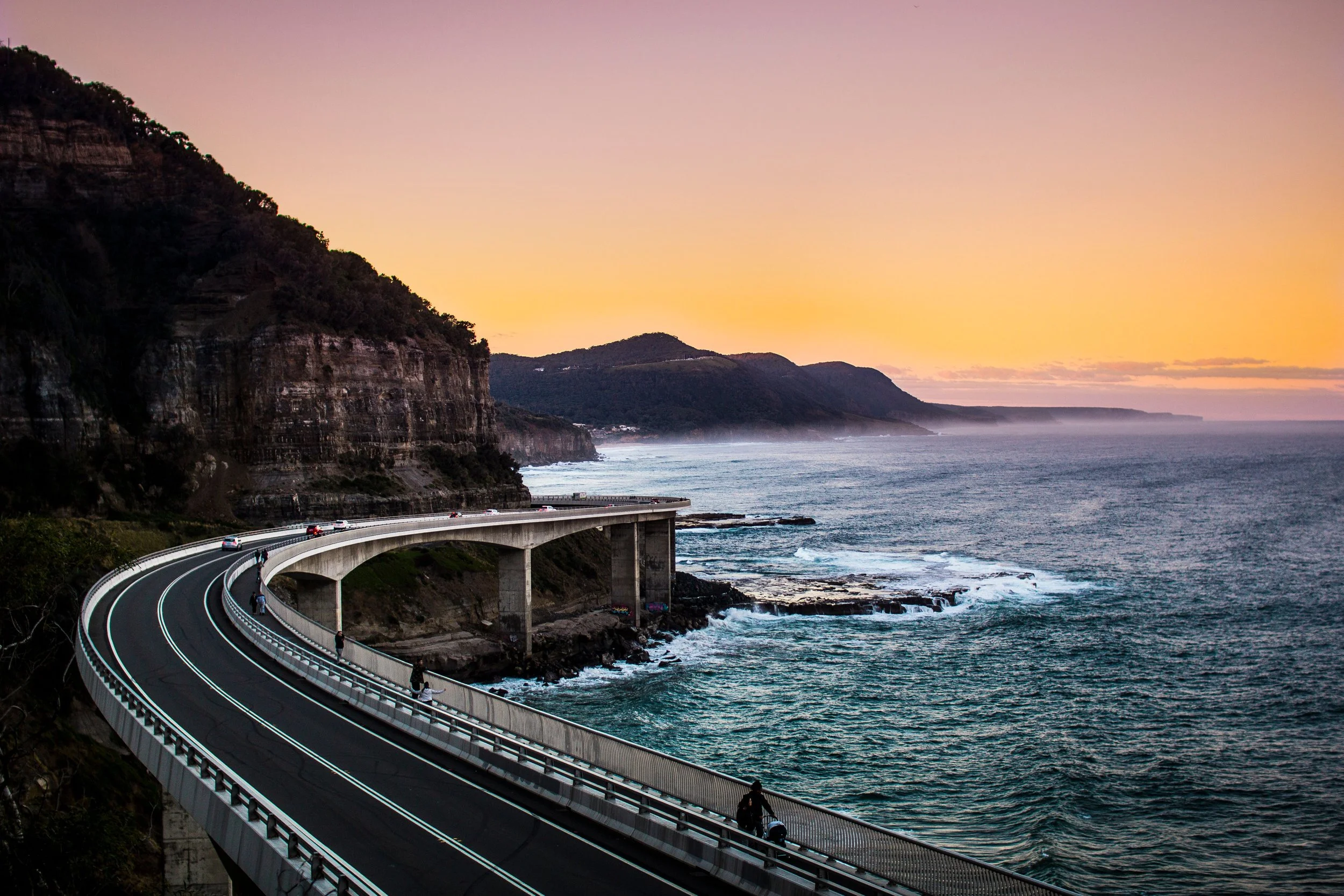
Photo Nathan Andrew
This spectacular, winding coastal drive passes through the world’s second-oldest national park and reveals a landscape shaped by millennia of culture and ingenuity.
I’ve been drawn to the northern section of Australia’s Grand Pacific Drive not only for its reputation as one of the country’s great coastal drives, but also because it passes through the forested wilderness of Royal National Park, established in 1879 and considered the world’s second-oldest national park.
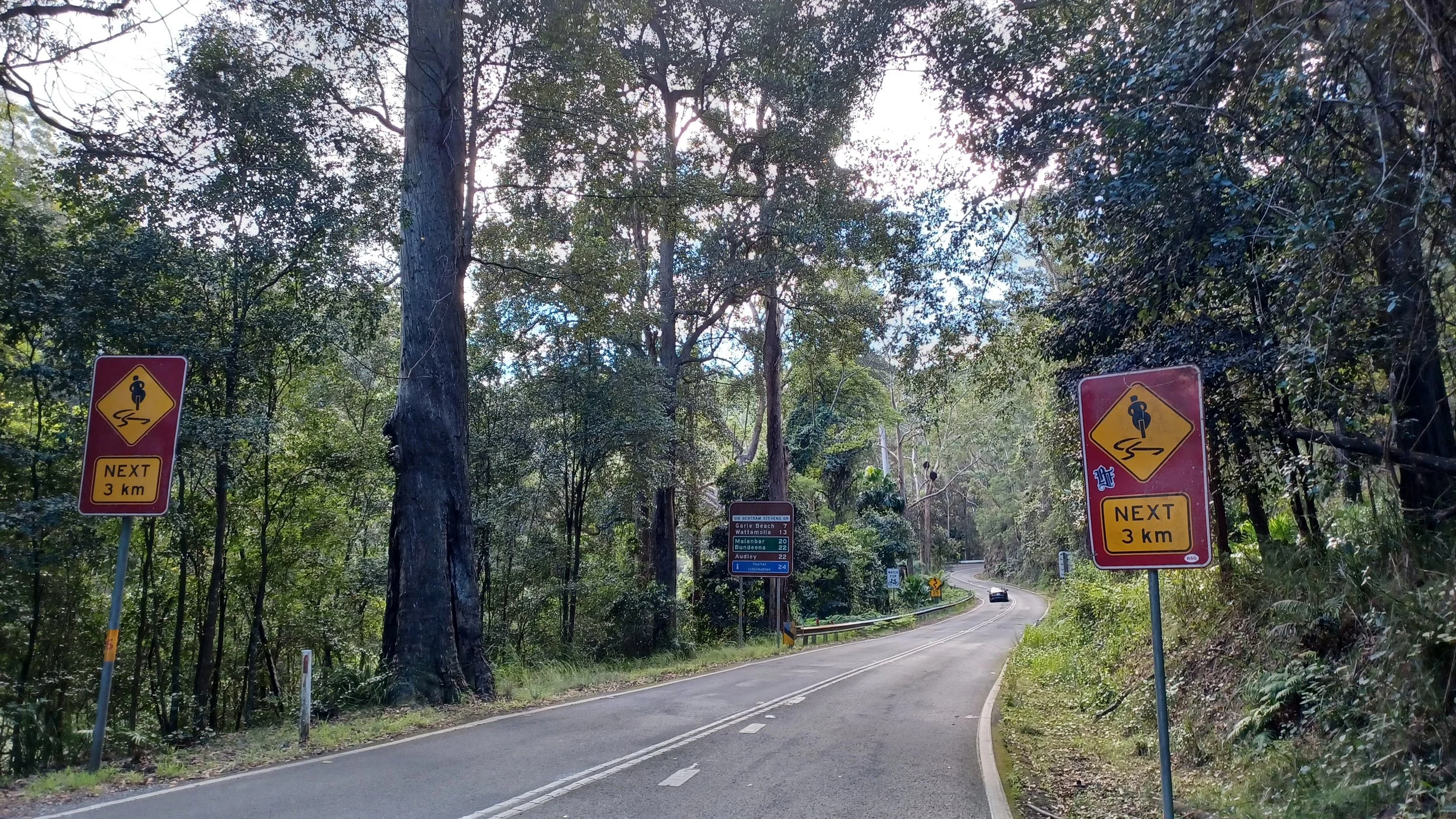
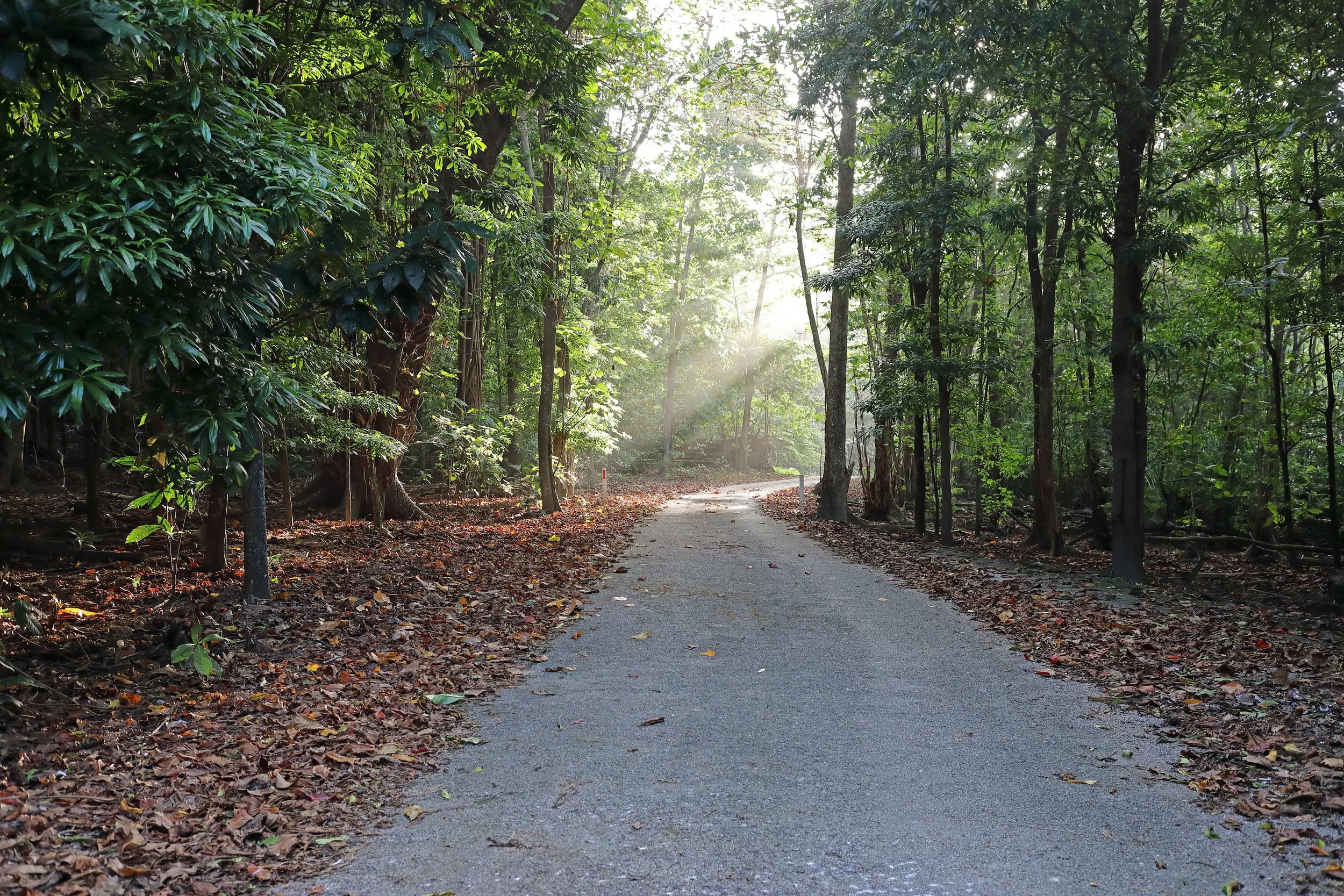
I start in Loftus, a leafy suburb around 20 miles south of Sydney. A short stretch along the Princes Highway leads to the park, where the landscape changes almost instantly. A tall canopy of eucalypts and palms closes in above the tarmac, scattering dappled sunlight across the road, before a pleasing series of twists and turns leads down to the Hacking River. Climbing again, tighter bends give way to longer curves before I take the turn towards Bundeena.
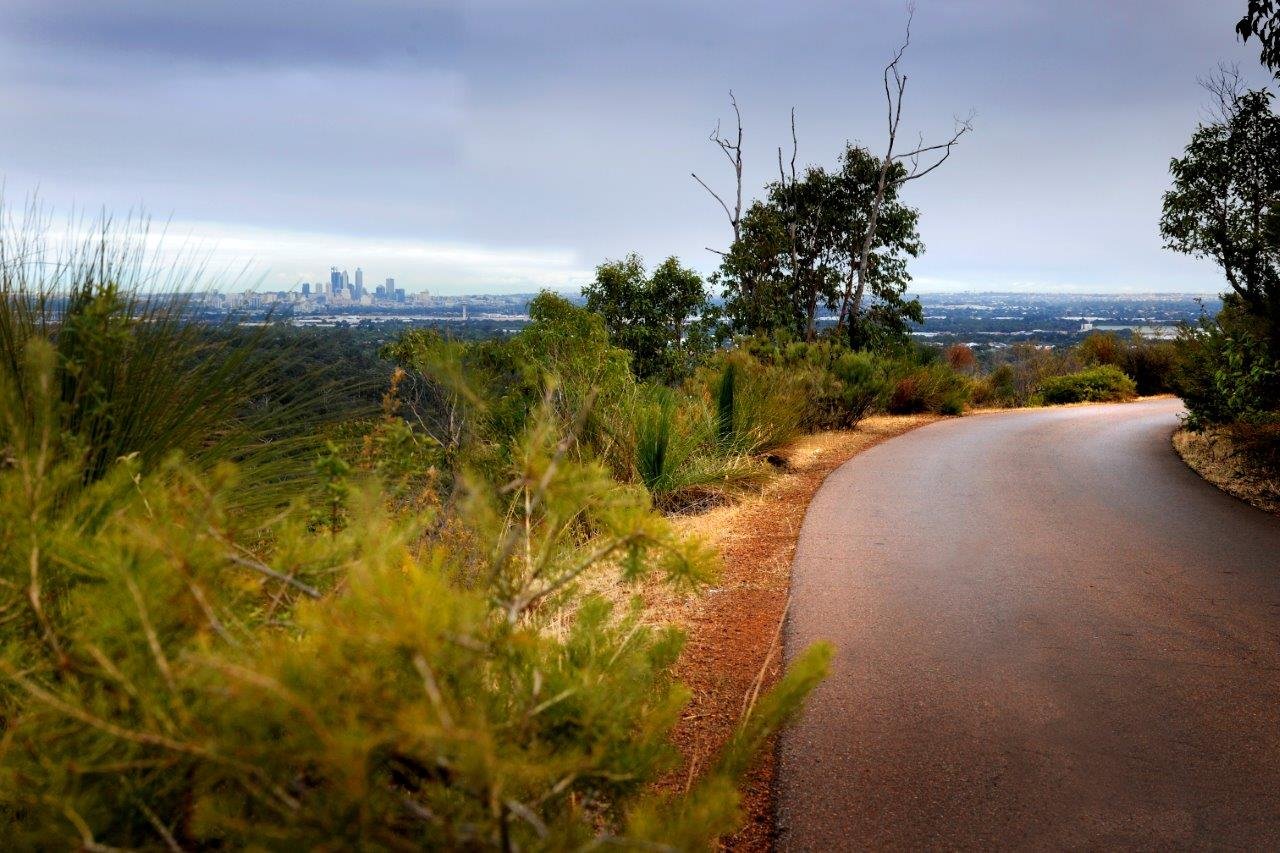
The forest suddenly falls away as the road reaches a ridgeline. A broad blue sky opens overhead; Sydney’s skyline is perfectly silhouetted against the northern horizon, while to the east, the glittering sapphire Pacific seems to stretch on forever.
Bundeena arrives as a sleepy hamlet of weatherboard houses. A walk along Jibbon Beach, past white-sailed boats darting around the harbour, leads to the ancient rock engravings at Jibbon Head. Created by the Dharawal people, who have inhabited this landscape for millennia, the engravings – many depicting animals – are carved into a natural sandstone platform, offering a glimpse into a culture deeply connected to the land.
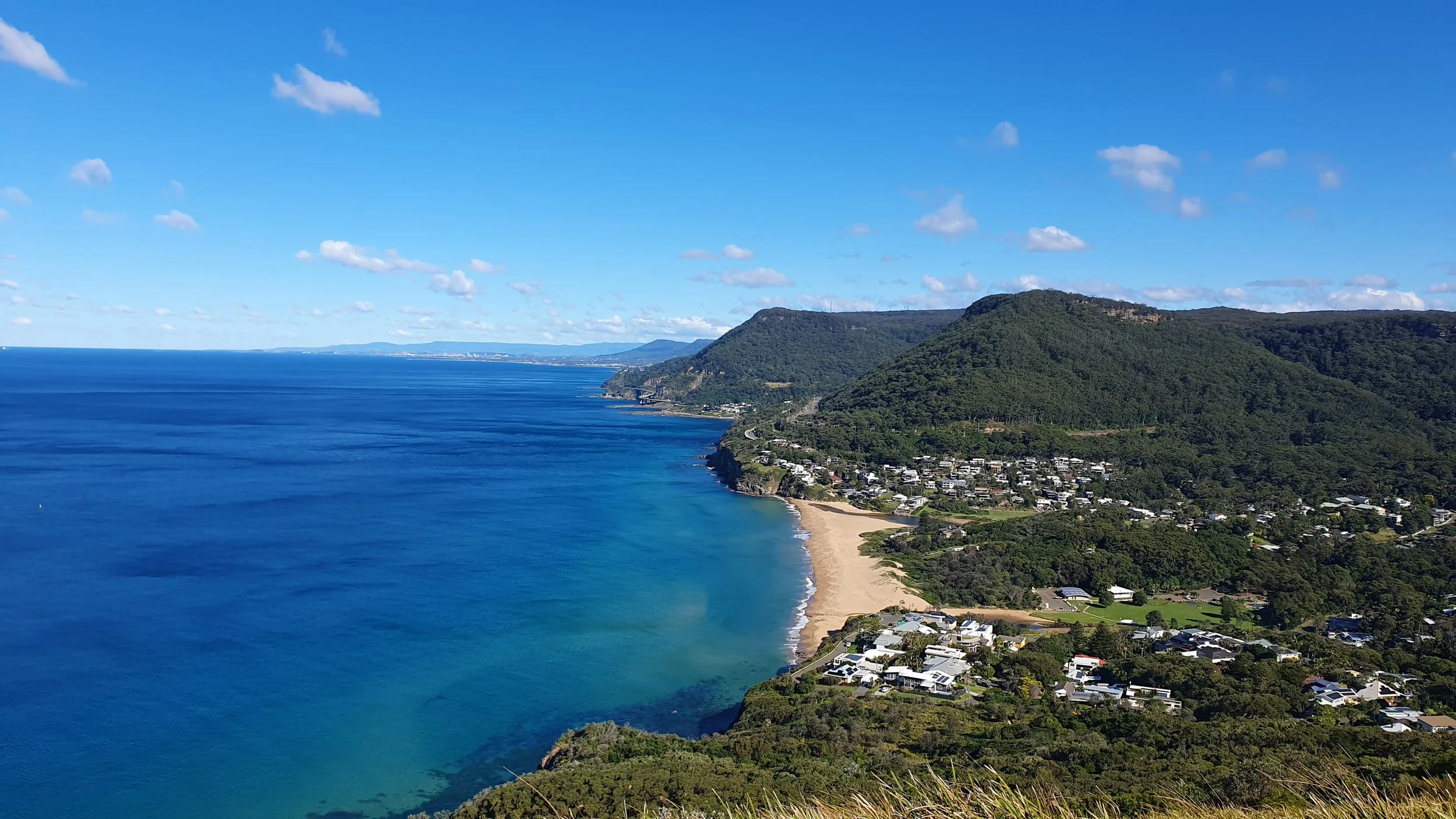
Back behind the wheel, more winding descents and weaving ascents take me south through the hilly heart of the national park. At Bald Hill Lookout, some 180 metres above sea level, the trees thin to reveal a stunning panorama. White-topped surf pounds the sandy cove far below, while the coastline beyond sweeps southwards, diminishing into the distance.
The steep descent of the Illawarra escarpment brings me to Stanwell Park, where signs tell the story of Lawrence Hargrave (1850–1915), the aeronautical pioneer who lived nearby. Hargrave developed the box kite and, in 1894, used four linked kites to lift himself nearly five metres above this beach, an experiment that contributed to the development of early aviation.
The road climbs again, hugging the escarpment as it rounds Coalcliff. Then comes one of the drive’s most dramatic engineering feats: Sea Cliff Bridge.
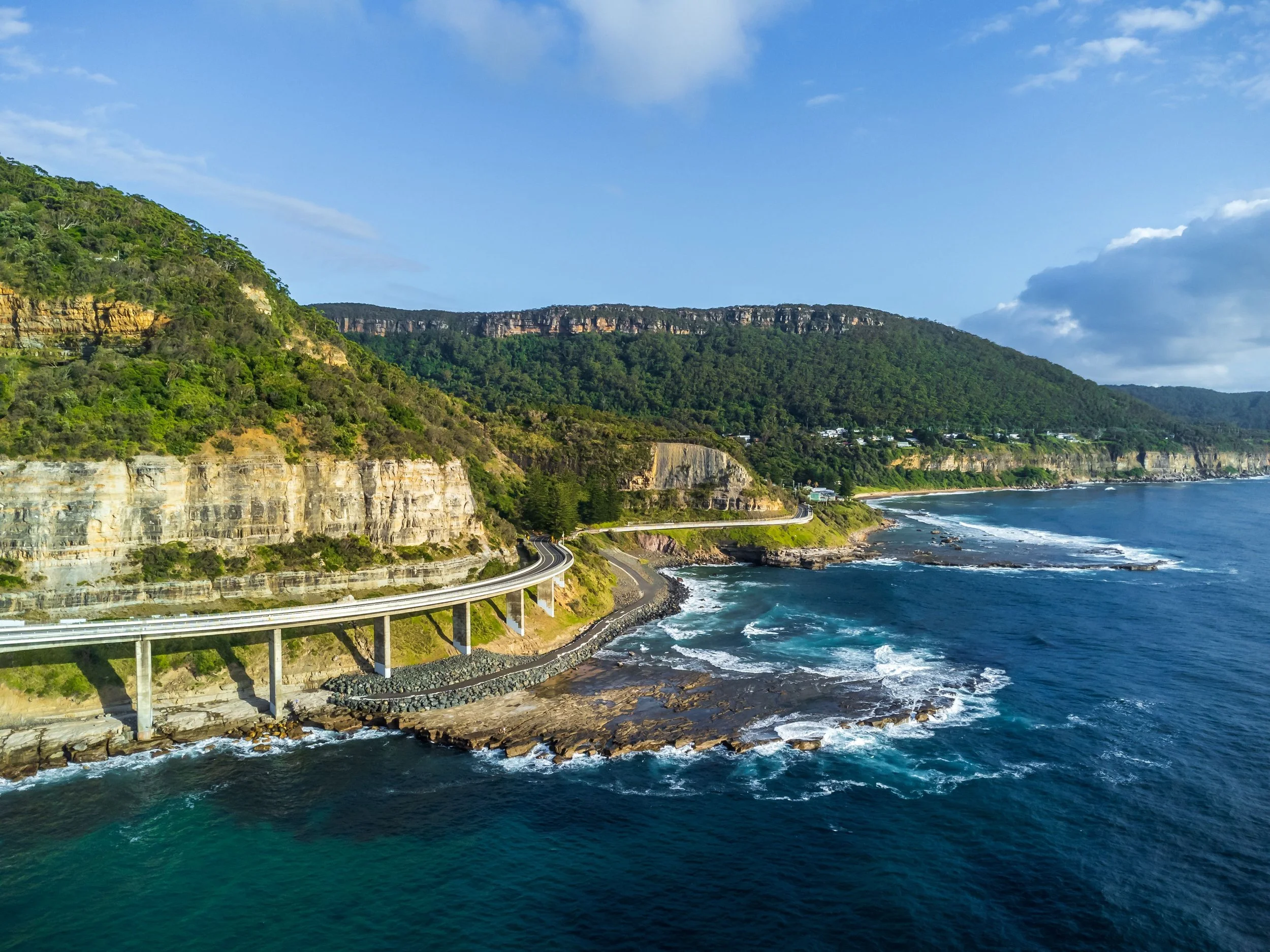
Constructed after repeated rockfalls forced the original road to close, the structure appears to float above the ocean. Its 665-metre length follows the coastline, running parallel to the cliff face and projecting out over the water on tall concrete piers. Driving across it feels like levitating above the waves.
The drama gradually subsides as the escarpment retreats inland, providing a verdant backdrop while the road stays coastal. In quick succession, I pass through Scarborough, Wombarra, Coledale, Austinmer and Thirroul, a string of beachside communities where café life seems more dictated by the sea than the road.
From Thirroul, Bulli Pass provides a final flourish, climbing back up the escarpment at gradients of up to 14.6 per cent and winding through a tight hairpin. Before long, I’m zipping back to Loftus along the Princes Motorway.
I’ve completed a 70-mile circuit, but the journey has been far more than a drive along the Pacific coast. From the Dharawal people’s enduring cultural legacy and the far-sighted Victorian-era vision of establishing a national park to Hargrave’s pioneering experiments with flight, the engineering achievement of Sea Cliff Bridge and even the easy-going beachside café culture, the route reveals the many ways in which people have lived with, learnt from and shaped this coastline.
Words & Photography Indi Bains
ROADBOOK
CLASS: Coastal Cruise
NAME: Grand Pacific Drive
ROUTE: Loftus to Loftus
COUNTRY: Australia
Distance: 71 Miles







This spectacular, winding coastal drive reveals a landscape shaped by millennia of culture and ingenuity.